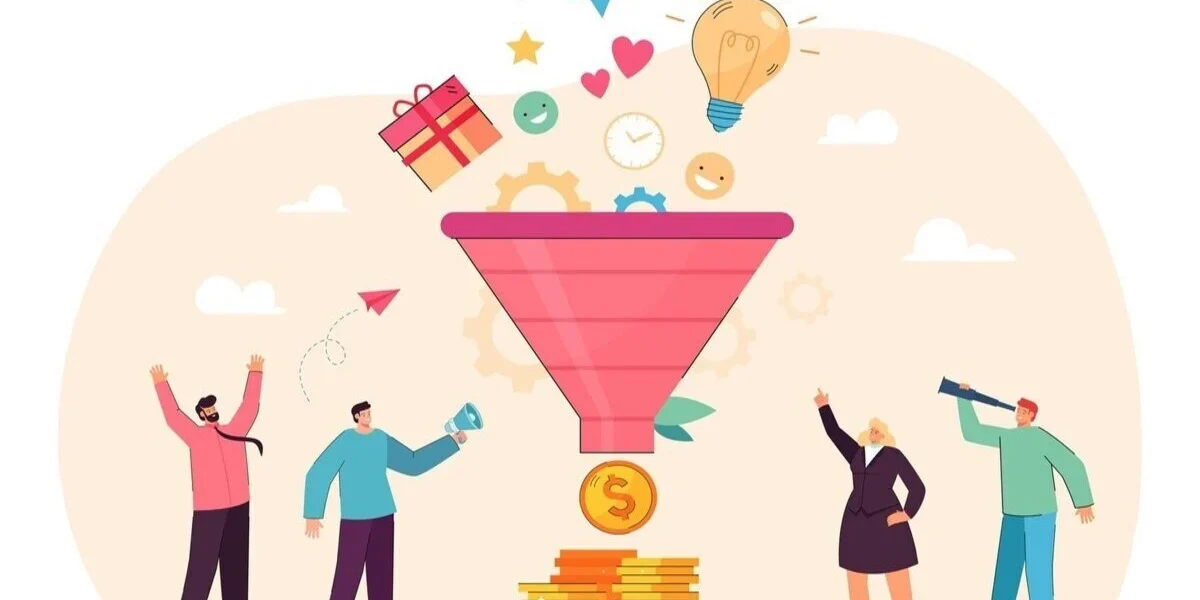

Have you ever wondered why some businesses grow fast online while others struggle to get results? The secret is often a simple but powerful tool called a content funnel. It is not magic – it is a smart system that guides people from discovering your brand all the way to becoming loyal customers who keep coming back.
In this guide, you will learn what a content funnel is, how it works at every stage, and why it is one of the best things you can use to grow your business online fast.
What Is a Content Funnel?
A content funnel is a step-by-step path that a visitor takes from first hearing about your brand to finally buying from you – and then staying with you long after. Think of it like a real funnel: wide at the top, where many people enter, and narrow at the bottom, where the most loyal customers remain.
At every step of this journey, you share the right type of content – blogs, videos, emails, guides, and more – to help people trust you and feel ready to take action.
The idea behind a content funnel has been around for over a hundred years. It maps the customer journey in a simple way – from awareness to consideration, then to purchase, and finally to loyalty. The beauty of it is that it works for any kind of business, big or small.
Why Does a Content Funnel Matter?
Today, people do not just walk into a store and buy. They research online, compare options, read reviews, and check social media before making a decision. The path to purchase is no longer a straight line – it goes in many directions.
This is exactly why a content funnel matters. It helps you stay in front of potential customers no matter where they are in their journey. It also helps you connect with them in a way that feels helpful, not pushy.
A content funnel also does more than just bring in new customers. It helps you build relationships with the people who already trust your brand. It supports both attracting new leads and keeping existing ones engaged – all while connecting the dots between your content, your marketing efforts, and your actual sales.
When your funnel works well, you spend less time guessing what works and more time doing what actually brings results.
The Key Stages of a Content Funnel
Stage 1 – Awareness: Help People Find You
At the top of the funnel, your goal is simple: make sure people know you exist. This is where most visitors first come into contact with your brand.
Imagine someone searching on Google or scrolling through social media without really knowing what they need yet. Your job at this stage is to show up at the right moment with content that catches their attention and offers real value.
You can build awareness through blog articles that answer common questions, short videos that explain helpful ideas, social media posts that spark curiosity, and online ads targeted at the right audience. Partnering with trusted voices in your space – like influencers or industry experts – also works well here.
The key thing to remember is this: if people do not know you exist, they cannot buy from you. So, this stage is all about getting noticed and staying top of mind.
Stage 2 – Interest and Consideration: Give Them Reasons to Stay
Once people know about you, the next step is to keep them interested. At this stage, visitors start exploring more – they read your blog, visit your website, follow you on social media, or look for more detailed information.
This is the phase where people compare their options. They want to know if your brand is worth their time and money. Give them strong reasons to say yes.
The best types of content here include in-depth guides, case studies, product comparison pages, email newsletters, and webinars. You can also use retargeting ads to gently remind people who visited your site but did not take any action yet.
At this stage, think of yourself as a helpful advisor, not a salesperson. The more value you offer, the more trust you build.
Check Also: Top 7 Prompt Engineering Tools Making AI Work Smarter in 2026
Stage 3 – Decision: Remove the Last Doubts
By the time someone reaches the decision stage, they are almost ready to buy. But almost is not enough. Even a small doubt can push them toward a competitor.
Your content here needs to remove those final barriers. Share honest testimonials from happy customers. Show real results through case studies. Offer a product demo, a free trial, or a satisfaction guarantee. Make the checkout or sign-up process as smooth and simple as possible.
Clear calls to action also make a big difference at this point. Tell people exactly what to do next and make it easy to do it. When someone is ready to commit, even a confusing button or a slow page can cause them to leave.
Stage 4 – Loyalty: Turn Customers Into Fans
This is the stage that most businesses ignore – and it is a huge mistake. A content funnel does not end when someone makes a purchase. That is actually where the real opportunity begins.
The loyalty stage is about keeping customers happy and encouraging them to come back. Sending follow-up emails, offering reward programs, sharing helpful tips and updates, and making customers feel valued – these are all ways to strengthen the relationship after a sale.
Here is the good news: keeping a current customer is much easier and cheaper than winning a new one. And happy customers do something even better – they tell their friends about you. That kind of word-of-mouth and organic referral is worth more than any ad campaign.
At [Zone Techinsight], we have seen firsthand how businesses that invest in the loyalty stage of their content funnel end up with a community of customers who actively promote the brand – turning every buyer into a natural advocate.
How a Content Funnel Helps Measure Results
One of the biggest advantages of having a proper content funnel is that it helps you track what is working and what is not. You can see exactly where people drop off, which content brings the most engagement, and which stage needs more attention.
This kind of data is gold. Instead of spending money on strategies that do not deliver, you can focus on the parts that actually move people through the funnel. Over time, small improvements at each stage add up to major growth.
A well-structured content funnel also makes it easy to track key numbers – like how many people enter the funnel, how many reach the purchase stage, and what percentage become repeat buyers. These numbers guide smarter decisions.
Read More: Best Facebook Posting Tricks That Can Boost Engagement Fast
Tips to Build a High-Performing Content Funnel Fast
Getting your content funnel right does not have to take months. Here are some practical tips to help you get started and see results faster:
- Match your content to each stage: Do not share a product demo with someone who just discovered your brand. Give them a helpful blog post or a short video first. Save the detailed sales content for people who are already considering a purchase.
- Focus on one channel at a time: It is better to do one platform really well than to spread yourself thin across all of them. Pick the place where your audience spends the most time and build your funnel there first.
- Use email as your funnel backbone: Email is one of the most powerful tools in a content funnel. It lets you send the right message to the right person at the right stage of their journey.
- Test and improve constantly: A content funnel is never truly finished. Look at your data regularly, find out where people stop engaging, and test different types of content to see what works better.
- Make it personal: The more your content speaks directly to your audience’s problems, goals, and questions, the more effective it becomes. Generic content does not move people through a funnel – relevant content does.
Teams like Zone Techinsight use this structured approach to make sure every piece of content has a clear purpose and a clear place in the funnel.
Why the Content Funnel Is Critical for Long-Term Online Growth
A content funnel does more than just drive sales. It builds a lasting relationship between your brand and your audience. Over time, that relationship becomes your most valuable business asset.
When you guide people through a thoughtful, well-planned funnel, you are not just selling – you are educating, supporting, and serving. That kind of approach earns trust, and trust earns loyalty.
Businesses that use a clear content funnel also tend to grow in a more organized way. Every piece of content has a job. Every step has a purpose. And every customer interaction is designed to add value. This makes the whole process more efficient and more scalable.
Conclusion
A content funnel is one of the most effective ways to turn visitors into loyal customers – and to do it fast. By creating the right content for each stage of the journey – awareness, interest, decision, and loyalty – you can guide people naturally toward buying from you and then staying with you for the long run.
The best part? A content funnel keeps working for you even when you are not actively selling. Every blog post, every email, every social media post becomes a piece of a system that attracts, nurtures, and converts – again and again.
Start building your content funnel today. Even a simple version with basic content at each stage will make a real difference. And as you learn what works for your audience, you can keep improving it to get even better results.
Frequently Asked Questions (FAQs)
Q1. What is a content funnel in simple words?
A content funnel is a guided path that takes a person from first hearing about your brand to becoming a loyal customer. It uses different types of content at each step to help people feel informed and confident enough to buy.
Q2. How long does it take for a content funnel to work?
It depends on your industry and audience, but most businesses start seeing results within a few weeks to a few months. The key is consistency – keep publishing valuable content and refining each stage based on what the data shows.
Q3. Do small businesses need a content funnel?
Yes, absolutely. In fact, a content funnel is especially useful for small businesses because it helps them compete with larger brands by being more targeted and strategic with their content.
Q4. What types of content work best at each funnel stage?
At the awareness stage, blog posts, videos, and social media content work well. At the interest stage, email newsletters, guides, and case studies are effective. At the decision stage, testimonials, demos, and offers help seal the deal. At the loyalty stage, follow-up emails, rewards, and helpful tips keep customers engaged.
Q5. Can a content funnel work without paid advertising?
Yes. Many businesses build successful content funnels using only organic content like blog posts, SEO, and social media. Paid ads can speed things up, but they are not required to get good results.
Q6. What is the difference between a content funnel and a sales funnel?
A sales funnel focuses on the process of closing a sale. A content funnel focuses on the content and information you share at each step to guide people toward that sale. In practice, both work together – the content funnel supports and feeds the sales funnel.
Q7. How do I know if my content funnel is working?
Track key metrics at each stage: website traffic, email open rates, time on page, conversion rates, and customer retention. If people are moving through each stage and buying – and coming back – your funnel is working.